

What We Always Pack for a European Family Trip (After Learning the Hard Way)
After traveling throughout Europe with kids, grandparents, and large family groups, we’ve learned there are a few things that consistently make trips easier, more comfortable, and far less stressful. Some are obvious essentials. Others are things we’ve learned the hard way.
Essential Packing Items
Important Documents - Passports, confirmations, etc. – Make sure to have a copy of these in your carry-on. Before you leave, take a photo of every passport and confirmation, then email the photos to yourself or save them somewhere the whole group can access. If a bag goes missing or a document gets lost mid-trip, you’re not completely stuck.
Phone chargers - Double-check that everyone packed theirs before leaving home. Chargers are one of the easiest things to forget during early morning departures. Keep this in mind at the end of your trip and make sure to collect all of them before you leave.
Medication - Always keep medications in your carry-on in case your checked bag is delayed or goes missing.
Cash - You shouldn’t need much, but bring enough for tipping, and keep small bills on hand. Tour guides, drivers, and porters are the most common places cash comes up, and it’s a lot easier to hand someone a few small bills than to break a large one on the spot.
Credit Cards - It’s smart to bring at least two different credit card types, like Mastercard and Visa. If one gets flagged for fraud or declined somewhere, you’re not left without a backup. Also, notify the bank in advance about your travel to minimize the risk of your card being blocked due to fraud alerts while you're traveling. Check ahead of time whether your credit card charges a foreign transaction fee. Some do, and it’s an easy thing to miss until you see the statement.
European adapter/converter - European outlets are different from those in the US, so make sure you bring what’s compatible with the countries you're visiting. An adapter changes the shape of the plug. A converter changes the voltage. Nearly all modern phone and laptop chargers are dual voltage and only need an adapter. Anything else that you would normally use in the U.S. needs a converter, or you’ll damage it.
Travel insurance - Understand your coverage, and carry the details with you. With a group that spans grandparents to grandkids, there's a higher chance someone gets sick or hurt mid-trip, and when that happens, it affects the whole group's plans, not just one person's. Knowing what your policy covers before you need it makes a stressful moment easier to handle.
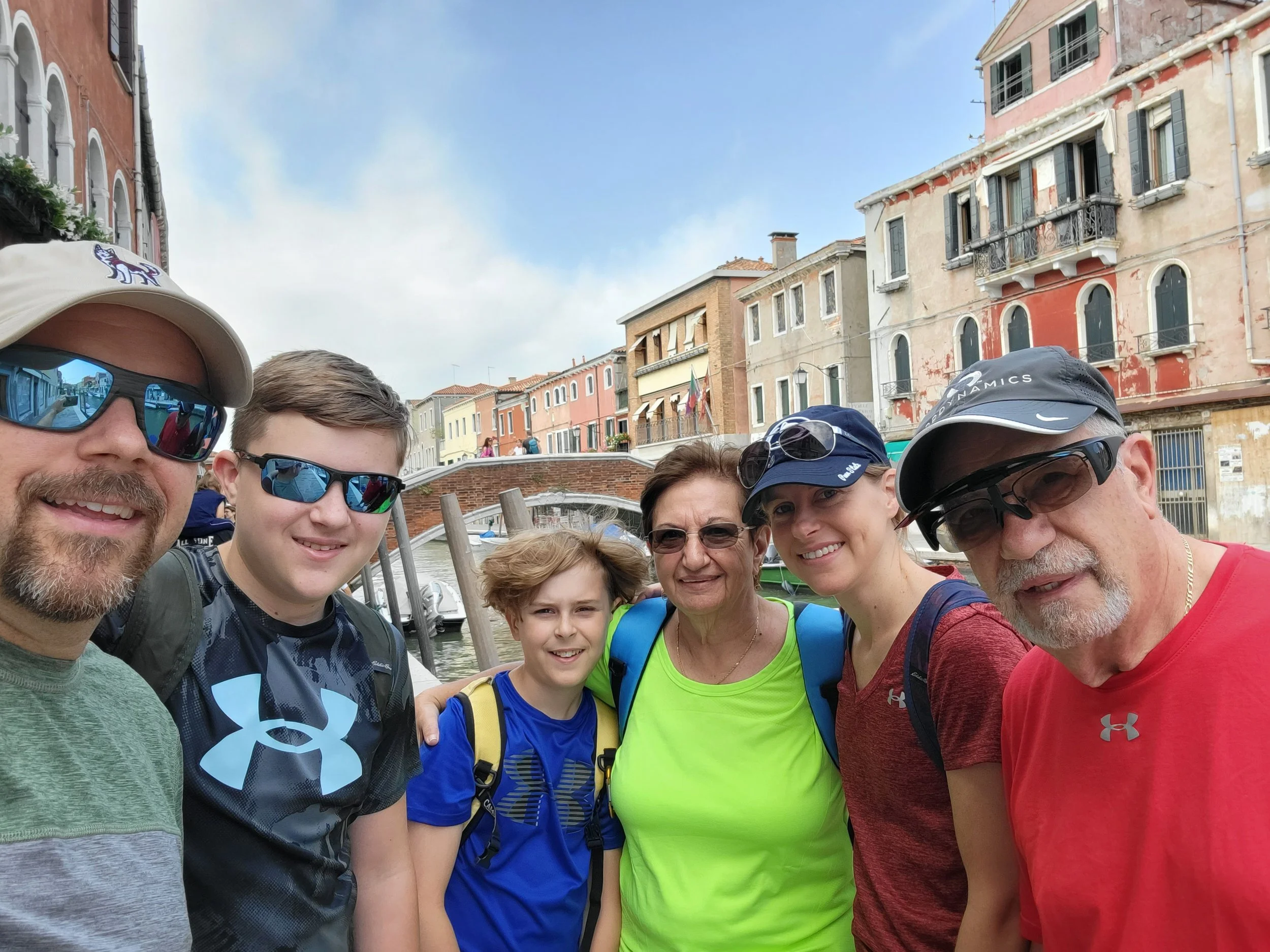
Three generations, one group selfie, and a canal behind us in Venice, Italy.
Multi-Gen Travel Items
A messaging app for the group - WhatsApp or a similar app that works over wifi, can be a reliable way to stay in touch once you're off the ship or if you've purchased the ship's internet package. Check ahead of time whether your cruise line has its own onboard messaging app too. Several offer one that works over the ship's wifi without a full internet package, which can be a cheaper way to stay connected with your group while onboard.
Compression socks - Helpful for grandparents or anyone prone to circulation issues on long flights.
Shared photo album - for confirmations and bookings so things can be shared among your group. When you’re traveling with six or more people across a few generations, someone is always asking who has the hotel confirmation or what time the excursion starts. A shared album with screenshots of every booking means anyone in the group can pull it up without digging through texts or asking around.
A printed itinerary - Not everyone in your group will be checking their phone constantly. A physical copy in each room or with each family unit means nobody's left asking what the plan is for the day.
Something to keep the younger kids occupied - A 7-year-old and a 77-year-old have very different patience for delays and long travel days. Bring a tablet, a deck of cards, or whatever keeps the kids settled when the group is waiting around.
Comfort Upgrades
Rain jacket - Northern European weather can change quickly, even during the summer months. A lightweight rain jacket is much easier to carry around than spending the rest of the day walking through a city soaked. On a trip to Norway in July, it rained the entire two days we were there.

Rain jackets on, hoods up, and still smiling. This was Alesund, Norway, when the rain never let up.
Sleeping aids - Sleeping on a plane isn’t easy for most people, and an overnight flight with an early arrival means you’re often stepping off the plane and straight into your first day. An eye mask, earplugs, or a neck pillow can make the difference between landing rested and landing wiped out. If you know you struggle to sleep during long flights, bring whatever helps you rest, and pack it in your carry-on so it’s on hand for the flight, not buried in a checked bag.
Pain medicine - Airport and airplane seats aren’t exactly known for comfort, and you’ll probably be doing more walking in a single day in Europe than you do in a week at home. Basic pain relievers for headaches or sore feet go a long way, and it’s one less thing to hunt for in an unfamiliar pharmacy if the whole group needs it.
Comfortable shoes - For your travel days and especially for all the walking you’ll be doing in Europe. Streets in a lot of European cities are older and uneven, cobblestones included, which is harder on your feet than flat American sidewalks. Bring shoes that are already broken in too. This isn’t the trip to test out something new.
Snacks/protein bars - Pack some trail mix, protein bars, or other snacks. Travel days can be long, and delays aren’t unusual.
Empty water bottle - You’ll be able to fill it up in the airport after security. There are typically filling stations throughout the airport.
Extra clothing and a bathing suit (if traveling to a warm destination) - Your room may not be ready when you arrive, so having access to a change of clothes or a bathing suit can make those first few hours much more comfortable.
Cooling towels - If you’re traveling to Southern Europe during the summer, these are especially helpful for grandparents and younger kids standing in direct sun during tours.
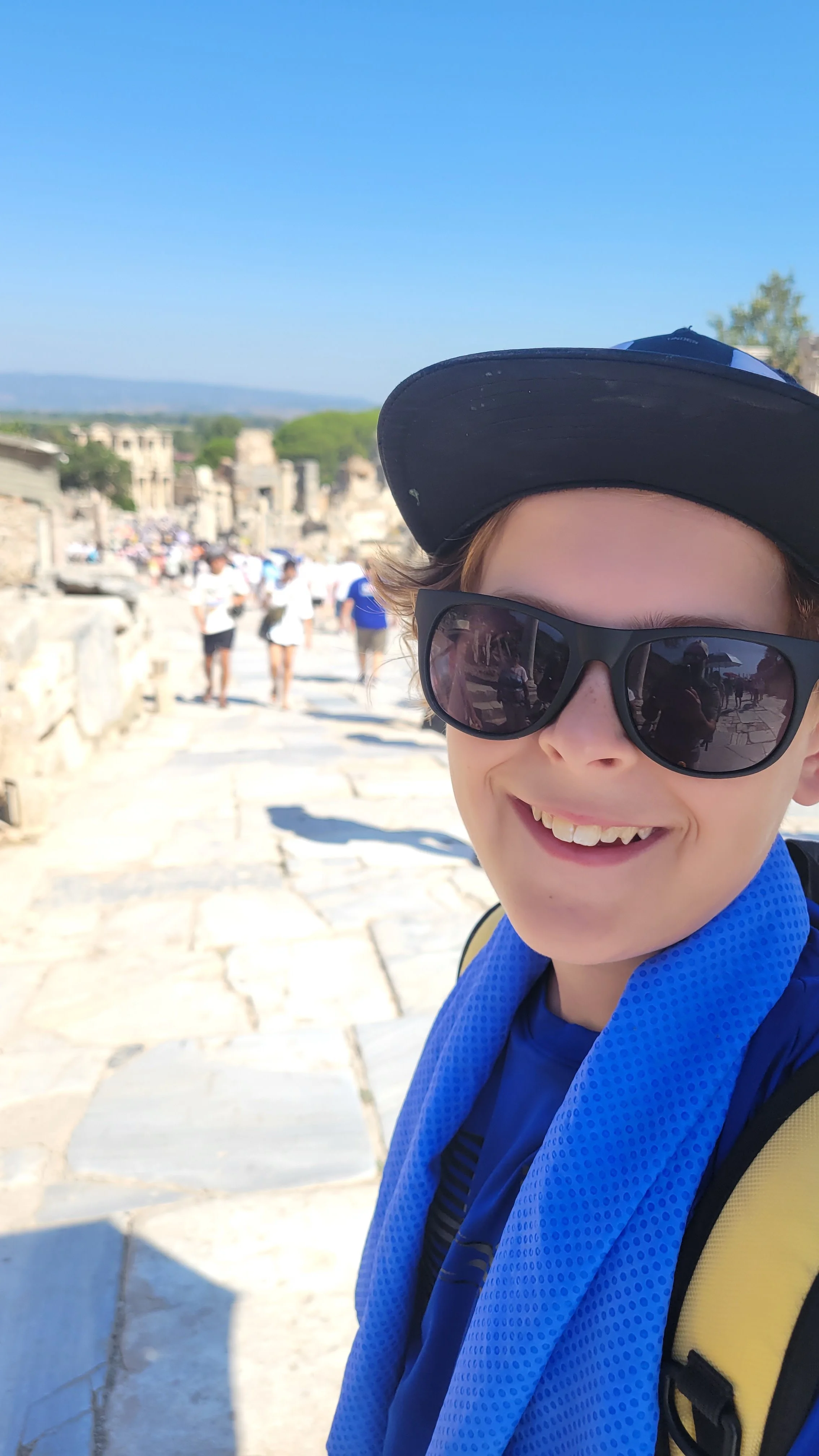
A cooling towel and sunglasses go a long way on a bright day exploring the ancient marble streets of Ephesus, Turkey.
Smart Travel Extras
Day Backpack - For carrying your water bottles, rain jackets, sunscreen, and anything else the group needs on hand once you’re off the bus or the ship for the day. If kids are old enough to carry their own backpacks, we found it’s better than having one person carry it all day.
Selfie stick (for large groups) - When there are six, eight, or more of you, getting everyone in one photo without flagging down a stranger gets old fast. This is key for when you want that group photo, but no one is around to take it for you.
Luggage locks (TSA-approved) - To secure your checked bags and carry-on bags if you plan to leave them unattended at any point, like at a hotel before check-in time or with a cruise attendant on embarkation day.
Luggage scale - It’s one thing to know how heavy your checked bag is at the start of your trip, but don’t forget about the end. Weight is just as important when flying home.
Tide stick - No one wants a stain on their shirt, but it’s usually not avoidable. Have one of these handy on your travel days.
Battery pack - For those times when you need to charge your phone but don’t have a plug. But double-check with your airline on limitations on the size of the battery pack.
Shoe organizer - The types that go over a door. These are helpful on cruises to corral all the small things that clutter up your counter space in your cabin, especially when a family of three or four is sharing a cabin. We use this to hold sunscreen, hair ties, band-aids, sunglasses, and other small things that would otherwise be scattered across the counter.
Cross-packing strategy - You should consider cross-packing. Instead of packing everyone's stuff in their own checked bag, mix it up. If one bag gets lost or delayed, everyone will have a few things in another bag to hold them over.
The little things can make a big difference on a European trip, especially when traveling with kids, grandparents, or larger family groups.
Most travelers remember to pack their clothes. It’s the practical items that often get overlooked until you actually need them.
A little preparation before your trip can bring comfort on travel days, reduce stress throughout your trip, and leave more room to simply enjoy the experience together.

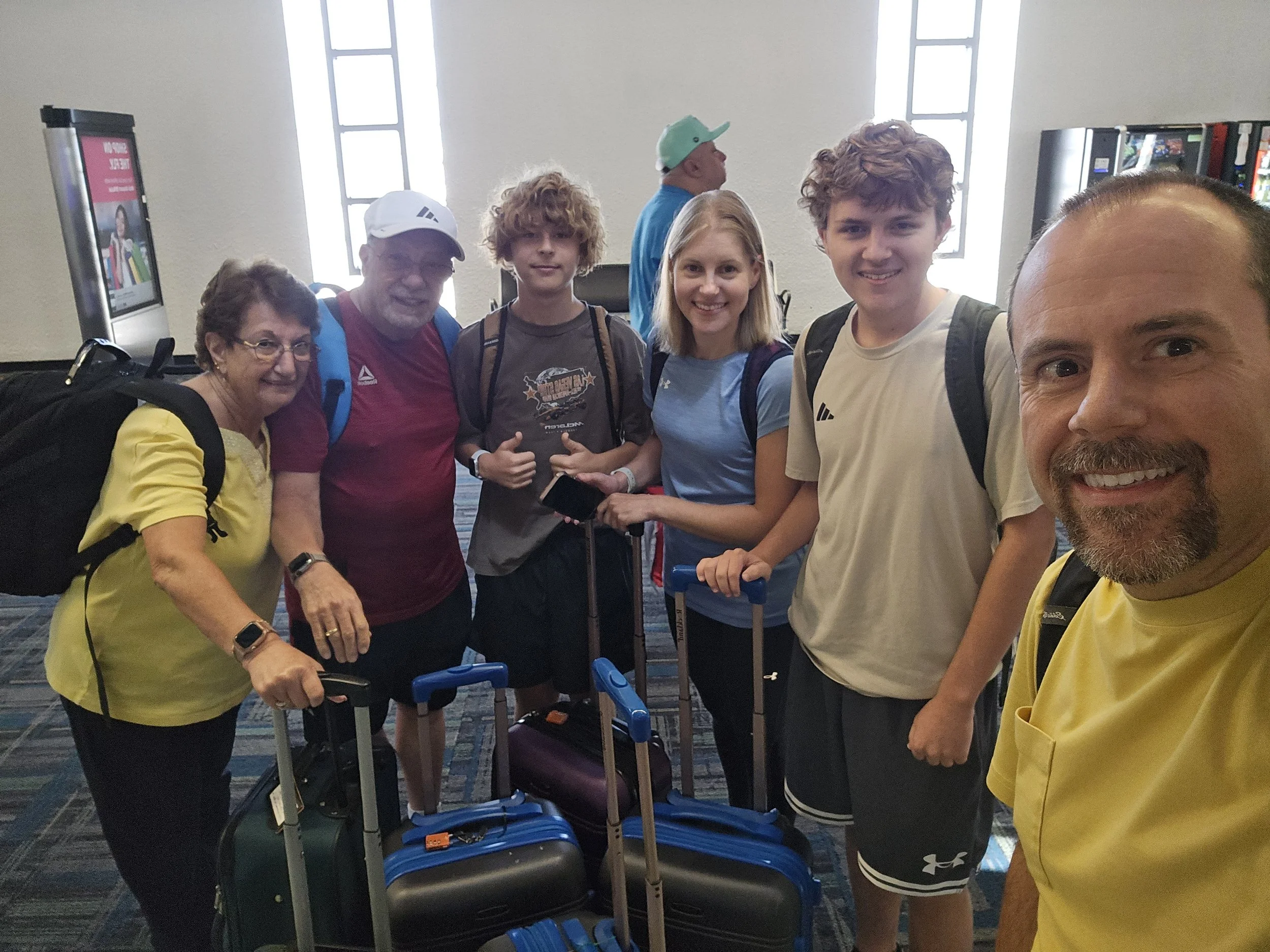

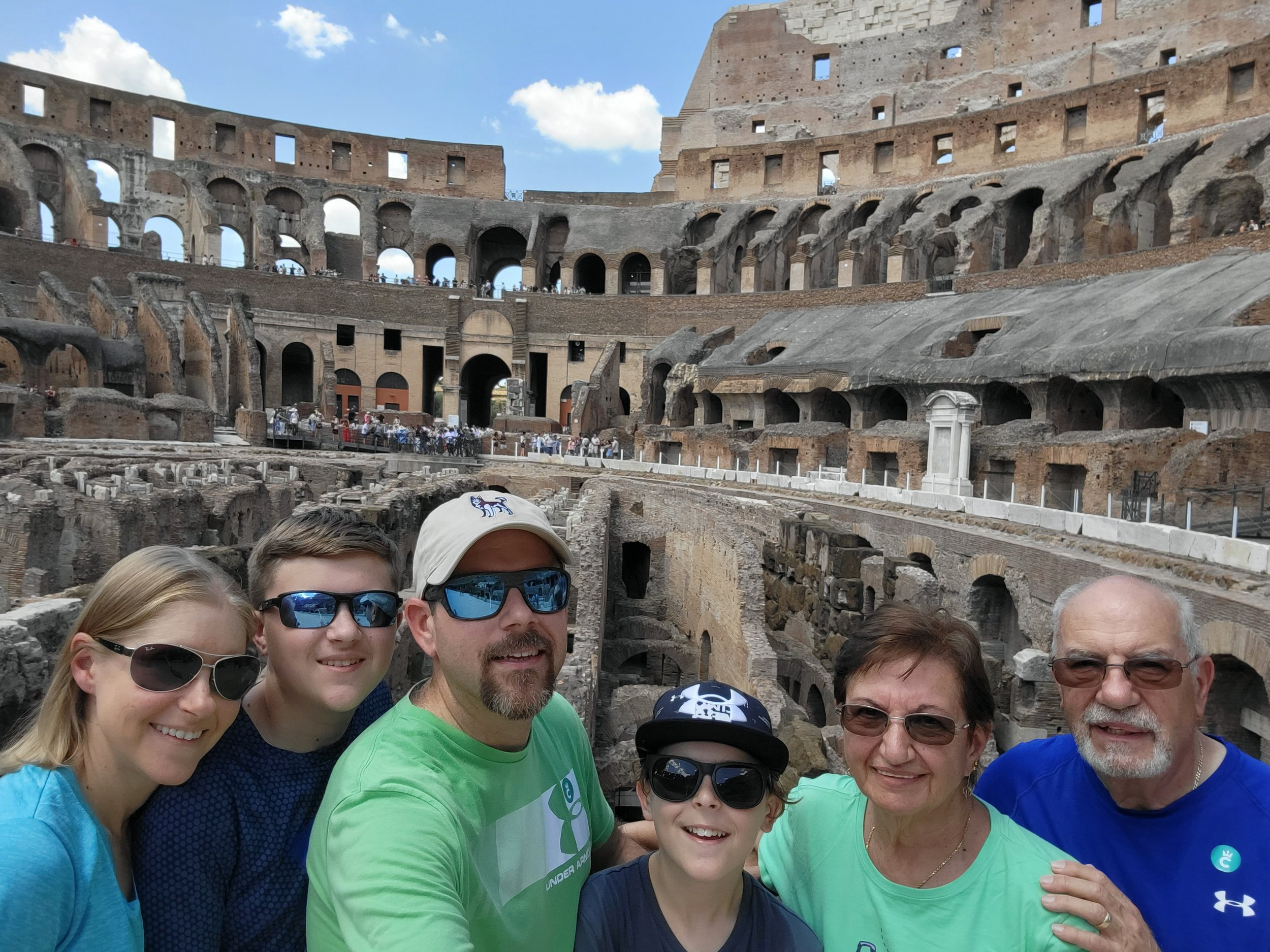
Would you believe the average American packs three times as much as they actually wear? Discover the mindset shifts, fabric choices, and packing hacks we use to fit two weeks of European travel into one carry-on each.